
Before your lesson
What to have ready before I arrive
Tania Greenwood · 5 August 2026 · 4 min read
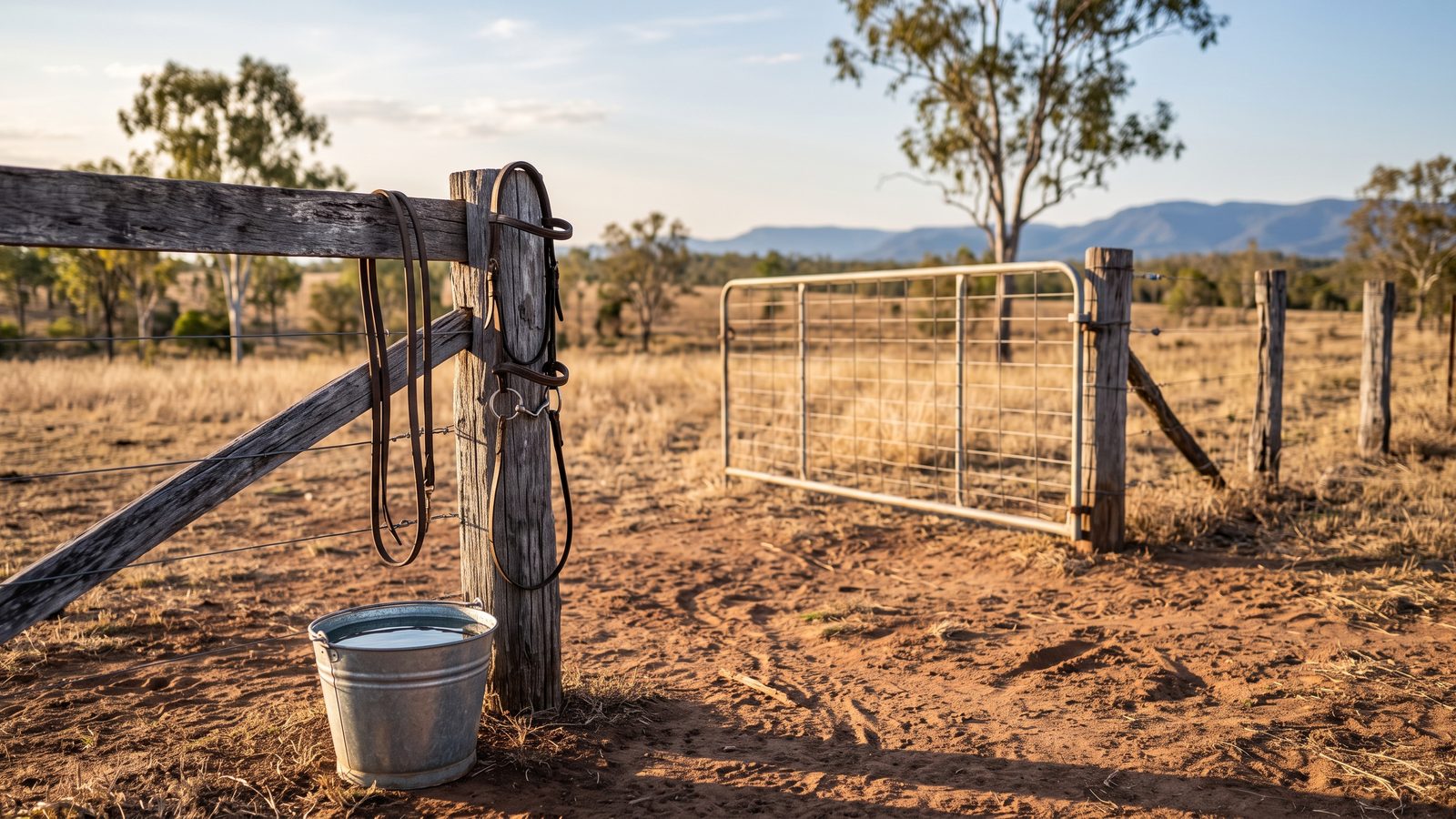
A short, practical checklist for your first mobile lesson, so the hour goes on riding rather than on sorting things out.
None of this is complicated, and nobody has ever failed it. It's here because the first lesson at a new place tends to lose fifteen minutes to catching a horse, finding a bridle and moving a water trough, and I would rather you spent that time riding.
If something on this list isn't possible at your place, it isn't a problem. Tell me when you book and we'll work around it. I've taught good lessons in some very ordinary paddocks.
The space
- Somewhere reasonably flat and clear, big enough to work a circle in. A proper arena is lovely and completely unnecessary. A mown paddock corner is fine.
- Have a look at the footing the day before. After rain, the spot that normally works may not be the spot to use. Deep, slick or badly rutted ground changes what's safe to ask for.
- Move anything that has drifted in. Feed bins, a hose, star pickets leaning in the corner, the wheelbarrow.
- Shut the gates you want shut. Especially if there are other horses who will take an interest.
Your horse
- Caught, and ideally in before I arrive. Not always possible, and it isn't a crisis if he's at the far end of the paddock, but it's the single biggest time saver.
- Feet picked out, and a quick look over him. If something has changed since yesterday, a fresh cut or heat in a leg, I would rather know at the start.
- Tacked up or ready to tack up, whichever suits you. If you would like help with saddle fit or bridle adjustment, leave it and we'll do it together. That's worth doing properly and it's part of the lesson.
Your gear
- An approved helmet that fits, for every rider, every lesson. This one is not negotiable.
- Boots with a heel, and long trousers.
- Whatever you normally ride in. I would genuinely rather see your real saddle and your nine-year-old bridle than something borrowed for the occasion. If your gear is causing a problem, I can't spot it unless it's in front of me.
The practical bits
- Somewhere to park that I can reach and turn around in, and a note on which gate to use if it isn't obvious.
- Water for your horse, and something to drink for yourself. North Queensland doesn't need explaining.
- Dogs put away. Even the good ones. Especially the good ones.
- Kids and spectators welcome, as long as everyone knows where to stand and that they need to stay there while we're working.
- A rough plan for shade if we're riding in the middle of the day. Early morning and late afternoon are kinder to everyone, horse included.
What I bring, and what I do not
I bring instruction, and that's deliberately all. I don't supply horses, venues, tack or equipment. You ride your own horse, in your own gear, at your own place, which is the whole idea.
I'll bring my eyes, a plan for the hour, and a willingness to throw that plan away if your horse turns up with a different idea.
One thing worth thinking about before I get there
Have a rough answer to "what would you like to work on?"
It doesn't need to be technical. "He's heavy in my hands", "I've lost my nerve over jumps", "I want to feel steadier in canter" and "I honestly don't know, that's why you're here" are all perfectly good answers. The last one is more common than you would think.
What that question does is make sure the hour goes on something you actually care about. It's your lesson.
Frequently asked questions
What if it rains? We talk. Light rain is usually fine, but wet ground changes what's safe, and I would rather move a lesson than ride on footing that could hurt your horse. If we need to reschedule, we reschedule.
Do I need an arena? No. A safe, reasonably flat area with decent footing is enough for most work. If what you've limits what's sensible to attempt, I'll tell you and we'll work within it.
Can I have a lesson if I keep my horse at an agistment property? Usually yes, but please check with the property owner or manager first, and make sure they're happy for an instructor to come on site. Some places have their own rules or insurance requirements about that.
Can two of us share a lesson? Yes. Semi-private and small group lessons both work well at home, provided there's enough safe space for the horses to work without crowding each other. See what it costs for the formats.
How long before the lesson should I bring my horse in? Enough time that he's caught, settled and not rushed. Fifteen or twenty minutes suits most horses. A horse who has been chased around the paddock five minutes before you get on isn't in a frame of mind to learn anything.
Keep reading
On your own horse
Why lessons on your own horse are worth it
What changes when you learn on the horse you actually ride, at the place you actually keep him.
Confidence
Getting your confidence back in the saddle
For riders who've had a fall, a fright, or a long time away, and are quietly wondering whether they've left it too late.
Coaching that comes to you
On your own horse, at your own place, across Townsville and surrounds.