
Confidence
Getting your confidence back in the saddle
Tania Greenwood · 26 June 2026 · 5 min read
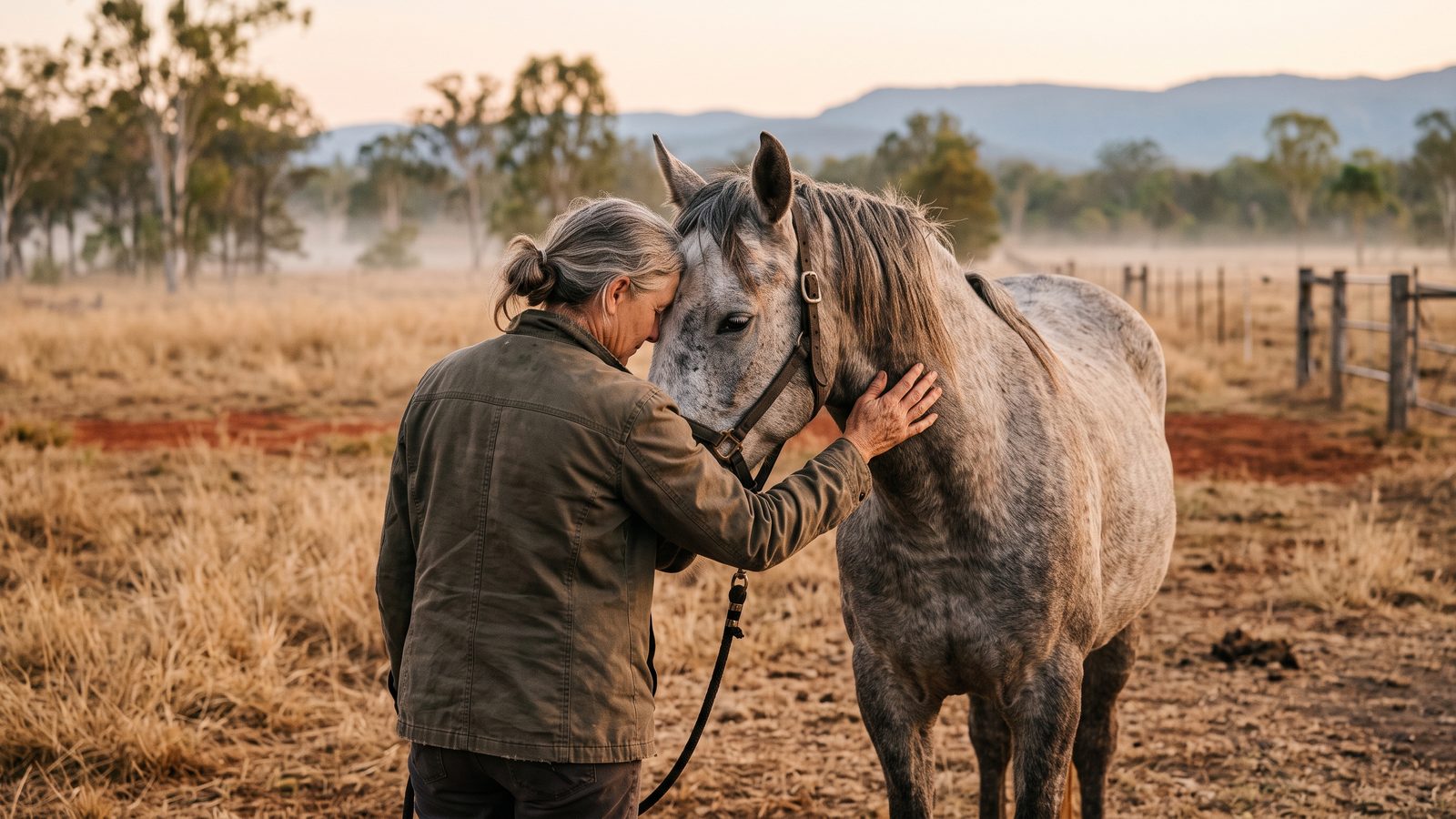
For riders who've had a fall, a fright, or a long time away, and are quietly wondering whether they've left it too late.
If you're reading this, there's a reasonable chance you already know exactly which ride it was. The one where he spun and you did not. The one where you came off in front of everyone. Or maybe there was no single ride at all, just fifteen years of life happening, and now the idea of getting on feels much bigger than it used to.
I've taught riders in that position for a long time, and I want to start with the most useful thing I know: there's nothing wrong with you.
Losing confidence around horses isn't a character flaw and it isn't weakness. It's your body correctly noticing that a horse is large, quick and occasionally unpredictable. That instinct kept you safe. The work is not to get rid of it. The work is to get it back in proportion.
Why confidence goes, and why it doesn't just come back
Confidence rarely disappears in one go. What usually happens is that a rider has a fright, and then quietly starts making small adjustments. You ride a bit less. You avoid that corner. You stop hacking out alone. You tell yourself you'll get back to it when things settle down.
Every one of those decisions is sensible on its own. Together, over a year or two, they shrink your riding down to the small part that still feels safe, and the fear grows to fill everything outside it.
That's why "just get back on" so often doesn't work. It skips all the ground in between. If your confidence went in stages, it usually comes back in stages too.
What actually helps
Making the first step small enough to be boring. The single most common mistake I see is a rider trying to prove something on day one. If you've not ridden in eight years, the goal for the first session isn't a canter. It might be grooming, tacking up and walking. That isn't a wasted lesson, that's the lesson.
Working on your own horse, at your own place. Familiar ground is doing quiet work for you. Your horse is calmer, you know the fence line, and nobody is watching. It removes several variables at once.
Understanding what he's actually doing. A lot of fear is really uncertainty. When you can tell the difference between a horse noticing something forty metres away and a horse winding up to explode, the world gets much less frightening. Horsemanship on the ground does as much for confidence as anything you do in the saddle.
Being allowed to say no. In my lessons you can say "I don't want to do that today" and we'll do something else. No explanation needed. A rider who knows they can stop is a rider who can afford to try.
Small, real wins. One percent better is worth everything. Ten rides that each go slightly well will rebuild more confidence than one heroic ride you spend the following week recovering from.
What doesn't help
I'll be honest about these, because they're common and well meant.
- Being told there's nothing to worry about. You know there's something to worry about. Being told otherwise just means you stop mentioning it.
- Pushing through it. Riding while frightened teaches your body that riding is frightening. Sometimes the brave choice is to get off.
- Comparing yourself to who you were at twenty. You aren't that rider. You are probably a more thoughtful one.
- Someone else riding your horse for you. It can be useful occasionally, but the confidence doesn't transfer. Your confidence is built by you, on him.
About age, because everybody asks
I get asked whether it's too late more than almost anything else, usually by riders in their forties, fifties and sixties, and often slightly apologetically.
It isn't too late. Adults do lose a little of the bounce and the recklessness that made falling off at twelve survivable. But adults bring patience, better judgement, a genuine interest in why things work, and the willingness to do the unglamorous groundwork that fixes problems. Plenty of the most satisfying riding I've watched people do has been in their second riding life, not their first.
What matters isn't how old you are. It's whether the horse suits you and whether the work is built at a sensible pace.
An honest word about the horse
Sometimes a nervous rider is sitting on a horse who isn't helping.
If your horse is genuinely too much for where your confidence is right now, no amount of good coaching will make that comfortable, and I would rather tell you than let you keep having frightening rides. That doesn't always mean selling him. It might mean more groundwork, a different job for him for a while, some help from your vet or saddle fitter, or someone else keeping him in work while you rebuild.
But I'll tell you what I see. You're entitled to that.
Frequently asked questions
How long does it take to get your confidence back? There's no standard answer, and anyone giving you a number is guessing. What I can say is that it usually comes back in steps rather than all at once, and that riders who are allowed to go at their own pace tend to get there and stay there.
Can I have a lesson without riding? Yes. Some first lessons are entirely on the ground: handling, leading, groundwork, watching how your horse responds to you. It's real work and it counts.
I haven't ridden in twenty years. Am I a beginner again? Not really. Riding lives in your body longer than you would think, and it comes back faster than you expect. What usually needs rebuilding is confidence and fitness rather than skill.
Will you make me do things I'm not comfortable with? No. You can stop, or say no, at any point in a lesson, and you don't need to justify it. My job is to help you ride better, and nobody rides better while they're frightened.
Is it worth having lessons if I only want to hack quietly? Absolutely. A safe, balanced, comfortable hack is a completely legitimate goal, and it asks more of a rider than people assume. Not everyone wants to compete, and that has never made anyone less of a rider.
Keep reading
Horsemanship
Learning to read your horse
He's telling you something on every ride. Most of what looks like a training problem is a conversation you haven't learned to hear yet.
Progress
How to improve your riding, one percent at a time
Why small, well-managed gains beat waiting for a breakthrough, and what one percent actually looks like in a lesson.
Coaching that comes to you
On your own horse, at your own place, across Townsville and surrounds.