
Progress
How to improve your riding, one percent at a time
Tania Greenwood · 20 July 2026 · 6 min read
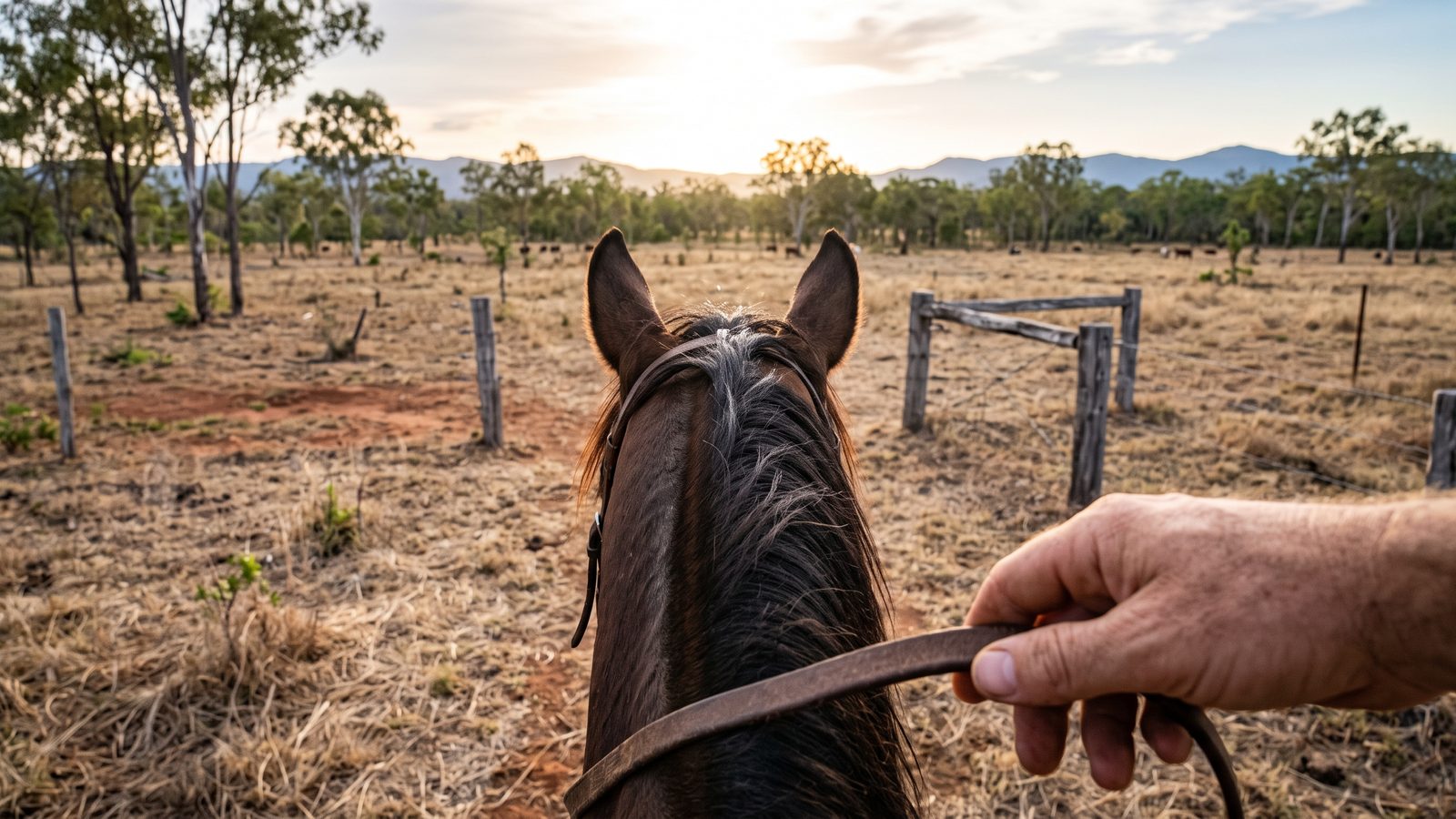
Why small, well-managed gains beat waiting for a breakthrough, and what one percent actually looks like in a lesson.
I get asked how long something will take more often than almost anything else. How long until I can canter confidently. How long until he stops leaning. How long until I stop gripping with my knee.
The honest answer is that I don't know, and neither does anyone who tells you they do. But I can tell you the shape it takes, because it's nearly always the same shape, and it isn't the one people expect.
Riding doesn't improve in leaps. It improves one percent at a time.
What one percent actually looks like
It's smaller than you think, and that's the point.
One percent is your hands staying still for three strides longer than last week. It's noticing he's falling in before I have to say it. It's one corner out of four that rides properly. It's getting on and realising, without thinking about it, that your stirrups are already the right length.
None of those will feel like anything on the day. You will very likely finish that lesson slightly disappointed, because you came to fix the whole problem and we moved a small piece of it.
Ten of those in a row make a different rider. That isn't encouragement, it is arithmetic. The trouble is that the arithmetic only becomes visible from a distance, and you're standing very close to it.
Why chasing a breakthrough usually costs you one
Here is the thing I watch happen most often. A rider decides today is the day. They have been stuck for a month, they're frustrated, and they're going to sort it out in this lesson.
What follows is almost always worse riding. The aids get louder. The rider stops breathing properly. They stop waiting for an answer and start demanding one. And the horse, who has been reading them the entire time, gets tense and stops offering anything at all, because offering has become risky.
Then the rider concludes they've gone backwards, which they have, but not for the reason they think.
The riders who improve fastest, in my experience, are almost never the ones trying hardest on any given day. They're the ones who turn up regularly, ask for something reasonable, and get off while it's still going well.
Your horse learns the same way
This is the half people leave out.
Horses don't have breakthroughs either. A horse learns by repetition he can trust, in small enough pieces that he's never guessing. When we ask for something new and he offers a version of it, the correct response is to stop and tell him he's right, not to immediately ask for a better version. Reward the try.
If you only acknowledge the finished article, he never finds out which part was the good bit, and you'll have missed the moment the thing was actually learned.
So a lesson that ends with him doing something slightly better than he did it last week, calmly, and being told so, is a lesson that worked. It won't look dramatic from the fence.
Plateaus are usually consolidation
Every rider has weeks where nothing seems to move. It's the point at which most people decide they've hit their limit, or that they need to change something drastically.
Usually neither is true. Usually something is being made permanent.
Skill doesn't accumulate at an even rate. There are stretches where you are absorbing rather than adding, From the inside they feel like standing still. From the outside, someone who hasn't seen you for a month will often say you've come on. If your position has quietly become automatic during a month where you felt stuck, that month did more for you than the one where everything felt exciting.
The plateau worth worrying about is a different thing entirely: months of no change, no enjoyment, and a horse who is getting worse rather than staying the same. That is usually a sign something needs looking at, and it's often not a riding problem at all. Ask your vet, your farrier or a saddle fitter before you ask more of yourself.
How to see progress you can't feel
Because you can't feel one percent, you need something other than feel.
- Write three lines after a ride. What you worked on, what improved, what didn't. It takes a minute and it's the single most useful thing I recommend. Reading six weeks of it back is where the progress becomes obvious.
- Film thirty seconds, once a month. Not to critique yourself. Just to have something honest to compare against.
- Notice what has stopped being hard. The things that no longer take any thought are all things that once did.
- Ask someone who doesn't see you every week. They will see the change you have stopped noticing.
A word about going backwards
You will have bad rides. Everyone does, including me, and including riders far better than either of us.
A bad ride isn't a lost percent. It's usually tiredness, weather, a horse who has been in for three days, or something happening in your life that walked into the arena with you. The skill hasn't gone anywhere. It will be there next time.
The aim was never a clean run of good rides. It's making sure a bad one does not talk you out of the next.
Frequently asked questions
How long does it take to get better at horse riding? There's no honest single answer, because it depends on the horse, the rider, how often you ride and what you're trying to do. What I can say is that riders who ride regularly and work in small, specific steps get further in six months than riders who ride hard occasionally, and they tend to stay there.
Why am I not improving even though I'm riding a lot? Riding a lot isn't the same as practising. Repeating something the same way for a year makes it more permanent rather than better. It's usually worth having someone watch you and name the one thing to change, because the parts of your riding you can't feel are exactly the parts you can't fix alone.
Is it worth having a lesson if I only want one small thing fixed? Yes, and that's often the most productive kind of lesson there is. A single clear question gives us somewhere to start and something to measure.
Should I be setting goals? Small ones, yes. "Ride three times this week" or "keep my hands quiet through the corners" are goals you can act on. "Be a better rider by Christmas" is a wish, and it tends to make you feel worse rather than ride better.
My horse seems to have gone backwards. Have I done something wrong? Probably not, and it's very common after a period of progress. Horses consolidate too, and they've off days for the same ordinary reasons we do. If it lasts longer than a couple of weeks, or he seems uncomfortable rather than unwilling, have him checked before you assume it's training.
Keep reading
The whole picture
Keeping a horse well in North Queensland
Feed, water, feet, skin and work are one system, not five jobs, and this climate tests every part of it.
On your own horse
Why lessons on your own horse are worth it
What changes when you learn on the horse you actually ride, at the place you actually keep him.
Schooling at home
Pole work you can do at home
Four poles and a flat patch of ground will give you more useful schooling than most people get out of a full arena, if you know what each exercise is asking for.
Coaching that comes to you
On your own horse, at your own place, across Townsville and surrounds.