
The whole picture
Keeping a horse well in North Queensland
Tania Greenwood · 28 July 2026 · 9 min read
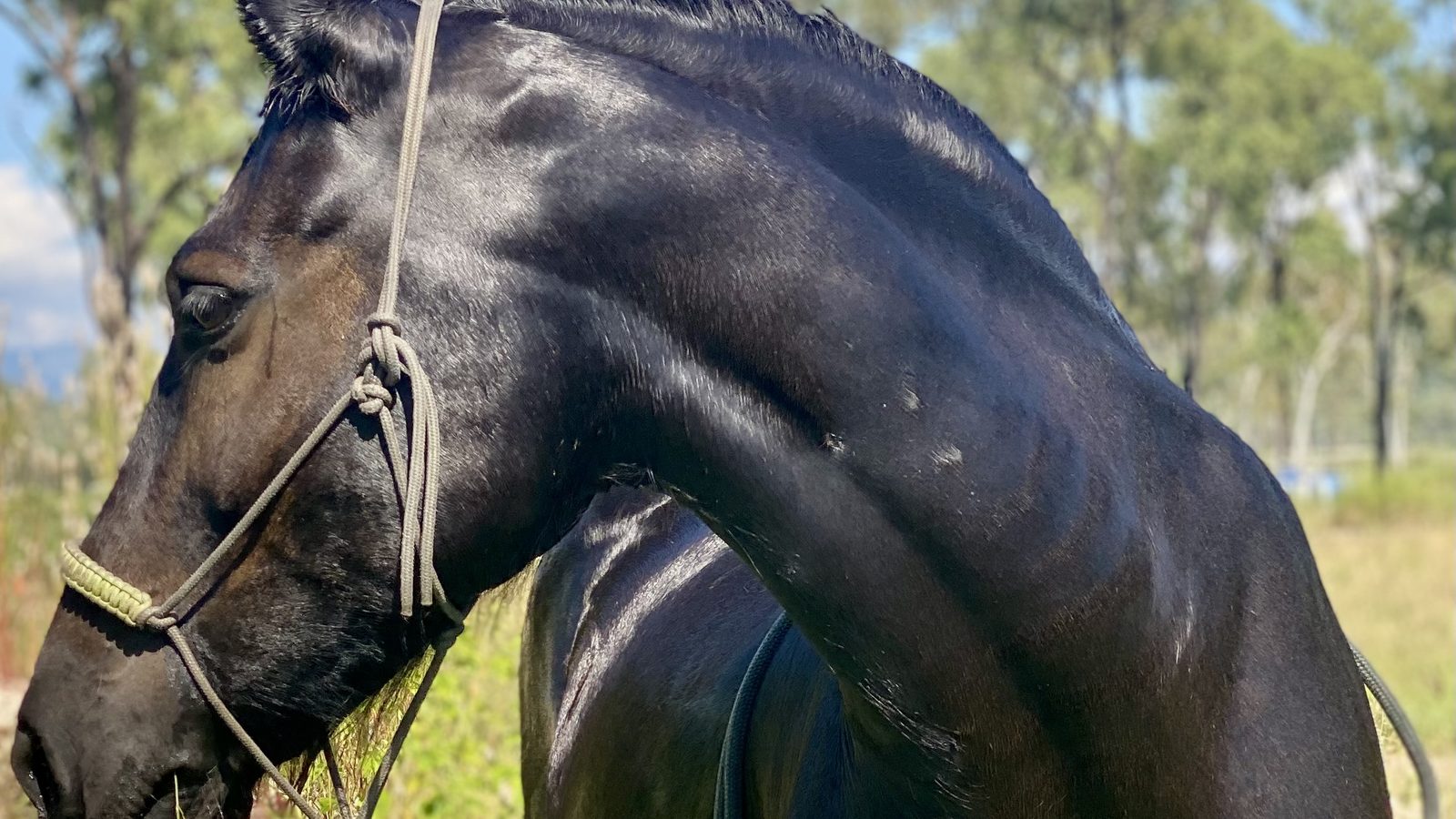
Feed, water, feet, skin and work are one system, not five jobs, and this climate tests every part of it.
I want to start with what this guide is not.
I'm a riding coach. I'm not a vet, a farrier or an equine nutritionist, and nothing here is a diagnosis or a feeding plan. What I can offer, after thirty-odd years of horses in this part of the world, is the thing that's genuinely hard to get from a book: an idea of how the pieces fit together, and a feel for which ones this climate will test first.
Because that's the real point. Riders tend to treat horse care as a list of separate jobs. Feed him. Trim him. Rug him. Ride him. It isn't a list. It's one system, and when something goes wrong it's usually not where you're looking.
The pieces aren't separate
A horse who isn't taking up his minerals properly won't build the topline you're riding for, no matter how correct your flatwork is. A horse standing in wet ground for six weeks will have feet that can't take the work you had planned. A horse who is quietly uncomfortable will find a way to tell you, and it will look like a training problem, and you'll spend six months fixing his shoulder when the answer was his diet or his saddle.
This is why I ask about the whole picture before I make a plan for anyone. Not to be nosy. Because "he won't go forward" has about nine possible causes and only about two of them are riding.
Most horse advice was written for somewhere else
Open almost any horse care book, or most of the internet, and you're reading about a temperate climate. Four seasons. Grass that grows in spring. Hard ground in summer, soft in winter.
We have two seasons, and they're both extreme. We have grasses that behave differently from the ones in the book. We have humidity that changes what heat does to a horse, insects most of the year, and a wet season that can turn a paddock into something no foot was designed to stand in.
None of that means the principles change. It means the application does, and a lot of people arrive here and quietly keep doing what worked down south.
Grazing and forage in Townsville
One of the biggest challenges for horse owners in North Queensland is managing grazing through our distinct wet and dry seasons.
During the wet, grass can come away quickly, but more isn't always better. A horse prone to putting on weight, or one at risk of laminitis, may need his grazing carefully managed rather than simply turned out onto all of it.
As the dry arrives, pasture quality and quantity fall away, and hay becomes an essential source of forage. Feeding the right type and the right amount matters for keeping the digestive system working properly and for reducing the risk of problems like colic.
There is no one-size-fits-all feeding program. Every horse is different, and his age, workload, body condition and health all influence what he needs. Learn to assess your own horse, keep an eye on his condition through the year, and adjust what you're doing as the seasons change.
If you've moved here from a cooler part of Australia and you're feeding the way you always have, that's the single most common gap I see.
If you're unsure whether your horse is getting the right nutrition, don't guess. Speak with your vet or a qualified equine nutritionist who understands the conditions up here.
Above all, remember my favourite saying: know your horse.
Water, salt and the heat
Heat alone is manageable. Heat plus humidity is a different problem, because a horse cools himself by sweating and it's the evaporation that does the cooling. When the air is already carrying a lot of water, that mechanism gets less efficient exactly when he needs it most.
Practically, that means:
- Water matters more than people think, and so does whether he will drink it. A trough in full sun that has been sitting all day isn't appealing. Horses drink less from water they don't like, and a horse who is drinking less is a horse closer to a colic and further from working well.
- Salt isn't optional here. A horse sweating most of the year is losing more than water. What form and how much are worth asking about rather than assuming.
- Some horses stop sweating properly in hot, humid climates. It's a real condition, it's more common in the tropics than most people realise, and it is serious, because you've removed his cooling system. If your horse is working and barely sweating while every other horse is dripping, that's a vet conversation, not a fitness one.
Feet, and the swing between wet and dry
Both seasons attack feet, in opposite directions.
The wet softens everything and gives bacteria somewhere to live. The dry can leave horn hard and brittle. The transition between them, when a hoof that has been wet for weeks starts drying out, is its own event, and it's often when things suddenly look worse.
None of that's fixable by wishing. What helps is the boring version: somewhere dry for him to stand for part of the day, feet picked out often enough that you notice a problem in its first week rather than its third, and a farrier or trimmer on a schedule that doesn't slip in the wet just because getting there's a nuisance.
Skin, flies and the wet
Skin is where this climate is least subtle.
Biting insects are a fact of life for most of the year, and some horses are genuinely allergic to them rather than just annoyed by them, which is a very different problem and needs a different answer. Persistent wet leads to the familiar scald and greasy heel patterns. Rugs and fly gear help, and also create their own trouble if they stay damp against the skin in this humidity.
The useful habit here is simply looking. Hands on the horse, every time, in the same order, so that something new registers as new. Most skin problems in this climate are far easier in week one than week four.
Work, and picking your hour
You can't separate his fitness from his environment either.
In the hotter months, riding in the middle of the day asks something of a horse that has nothing to do with the training you're trying to do. Early and late aren't just kinder, it's the only time you get an honest answer about how he is going. Judge the work by how long he takes to come back down afterwards rather than by how he looked during it.
The wet brings the opposite trap. Ground gets deep or greasy, work gets skipped for weeks, and then the first dry weekend everybody makes up for it in one session. That's where a lot of injuries live.
Consistency is the whole thing
If there's one idea I would leave you with, it's the same one I bring to coaching. It isn't the good month that builds a horse. It's ordinary weeks, repeated, without gaps you have to recover from.
A horse who is fed sensibly, drinking well, standing somewhere dry for part of the day, seen by a farrier on schedule and worked lightly but regularly through the build-up is a horse who can take a training plan. One who has been on and off all year is not, and no lesson I give will change that.
That's also why I ask about all of this. My job is to help you and your horse get better together, and I can't do the riding half honestly if the rest of the picture is quietly working against you.
When to stop asking the horse and start asking someone else
Some of it's genuinely not a riding problem, and the honest thing is to say so.
Call your vet, farrier, saddle fitter, dentist or nutritionist rather than booking another lesson if you're seeing: a change in behaviour that arrived suddenly, unwillingness that's new, a horse who is losing condition on adequate feed, lameness of any kind, heat or swelling, a horse not sweating in the heat, or any of the skin problems above spreading rather than settling.
I would far rather tell you to call somebody else than take your money for a lesson your horse was never in a position to use.
Frequently asked questions
How much hay should I feed my horse? Forage should be the foundation of every horse's diet. As a general guide he wants at least 1.5% of his body weight in forage a day, with around 2% about ideal for many horses. For a 500 kg horse that's roughly 7.5 kg to 10 kg of hay or other forage daily, depending on his grazing, his workload and what suits him.
Why does forage matter so much? It isn't just about filling hungry tummies. Forage keeps the digestive system working, it helps guard against gastric ulcers by encouraging him to produce saliva, and it satisfies his natural instinct to graze for much of the day. Enough of it also cuts down boredom and the habits that come with it, like weaving and crib-biting. Up here pasture changes so much between the wet and the dry that hay often becomes essential, and the two you'll see most are Rhodes grass and lucerne, which each bring something different. If you're unsure how much or which type, ask your vet or a qualified equine nutritionist. Every horse is an individual, and the best feeding plan is the one built around yours.
Do horses need salt in North Queensland? A horse sweating for much of the year is losing electrolytes as well as water, so salt is a genuine consideration here rather than an optional extra. The right form and amount depends on the horse, the work and the rest of the diet, so it's worth asking your vet or nutritionist rather than guessing.
When should I ride in summer? Early morning or late afternoon, and judge the session by how quickly he recovers afterwards rather than by how he seemed while working. In high humidity a horse sheds heat less efficiently, so the same work costs him more than it would in a dry climate.
My horse hardly sweats. Is that good? No, and it's worth taking seriously. Some horses in hot, humid climates lose the ability to sweat properly, which removes their main way of cooling themselves. If your horse is working and barely sweating while others are wet through, speak to your vet.
Can we still have lessons through the wet season? Usually, with some flexibility. Wet ground changes what's safe to ask for, so we may do more groundwork, more walk and less fast work, or move a lesson if the footing is genuinely unsafe. A skipped week is better than an injury that costs you three months.
Keep reading
Progress
How to improve your riding, one percent at a time
Why small, well-managed gains beat waiting for a breakthrough, and what one percent actually looks like in a lesson.
Horsemanship
Learning to read your horse
He's telling you something on every ride. Most of what looks like a training problem is a conversation you haven't learned to hear yet.
Coaching that comes to you
On your own horse, at your own place, across Townsville and surrounds.