Horsemanship
Learning to read your horse
Tania Greenwood · 9 July 2026 · 7 min read
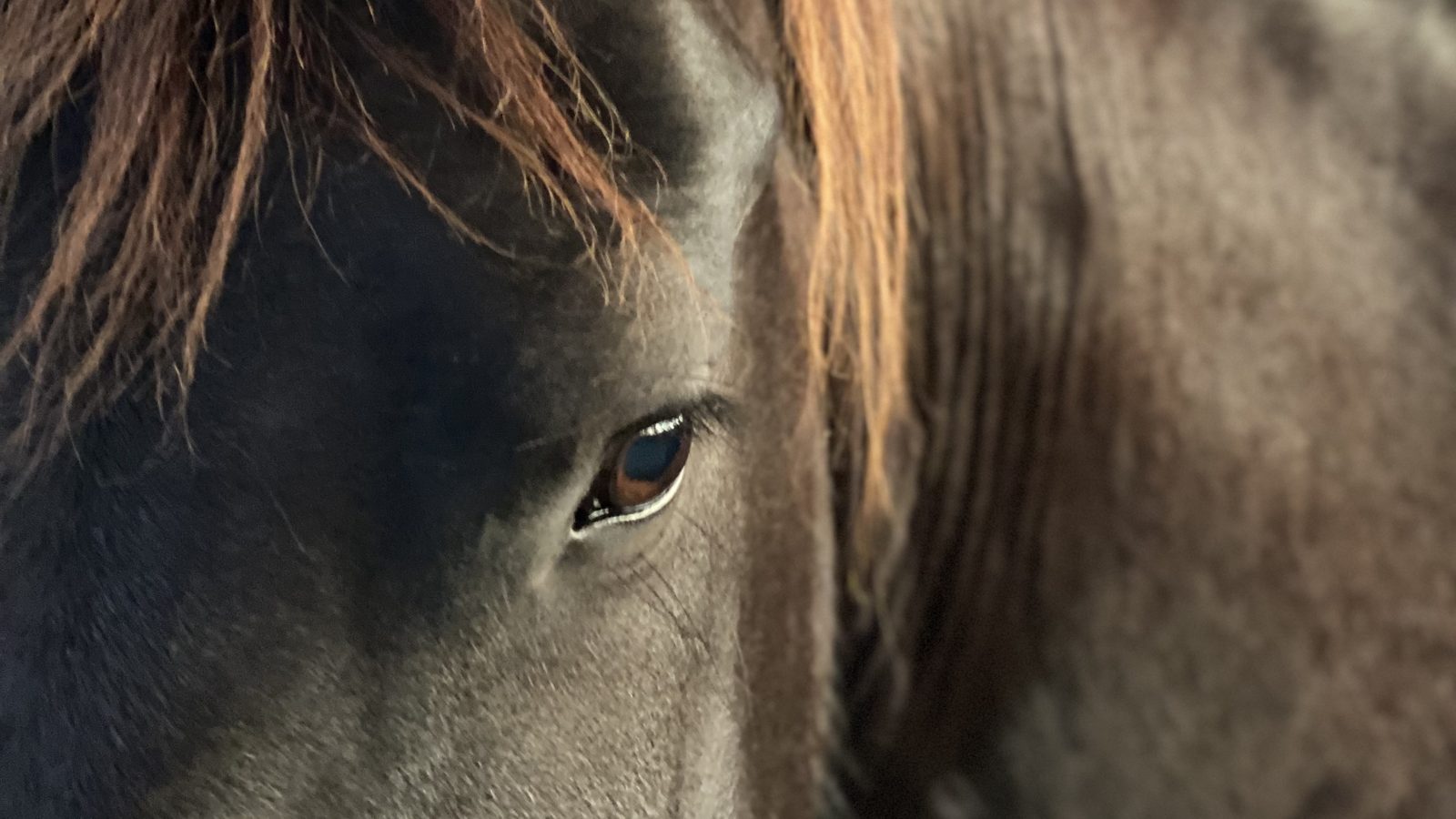
He's telling you something on every ride. Most of what looks like a training problem is a conversation you haven't learned to hear yet.
I've watched a great many riding lessons, and the single biggest difference between riders who progress and riders who stay stuck isn't talent, fitness or even how often they ride.
It's whether they've learned to notice what the horse is telling them.
Your horse is communicating constantly. Not mystically, and not in a way that needs a special gift. He's a large prey animal with a limited set of ways to express himself, and he uses them all day. The question is never whether he is saying something. It's whether anyone is listening.
Most training problems are conversations
Here is what I see most often. A rider brings me a problem: he won't go forward, he rushes his fences, he won't stand at the mounting block, or he naps at the gate.
Those are described as behaviour, and treated as disobedience. Almost always they turn out to be one of three things.
He's uncomfortable. Teeth, back, saddle, feet, gut. A horse in pain does not limp politely and wait to be asked. He resists, rushes, or shuts down, and it looks exactly like attitude.
He doesn't understand. The aid is unclear, or it means one thing on Tuesday and something else on Thursday, or he was corrected for the very thing he offered last week.
He's frightened. Not necessarily of the thing you think, and not necessarily now. Horses remember.
Only a small remainder is what most people would call naughtiness, and even that usually has a history behind it. So the first skill isn't correcting the behaviour. It's working out which of those you're looking at, because the right response to each is completely different, and getting it wrong makes all three worse.
What to actually watch
People want a list of signals with fixed meanings, and that's where this goes wrong. Ears back doesn't mean cross. Ears back can mean listening to you, or hearing something behind him, or concentrating hard.
The skill is reading the whole horse at once, and looking for change rather than for a fixed meaning.
- Posture and topline. Is he carrying himself loosely, or is there a braced quality through his back and neck? Tension in a horse is visible before it is felt.
- Breathing. Rate, and whether it settles when the work stops. A horse who stays up long after you've finished is telling you something.
- The eye and the muzzle. Soft and mobile, or hard and tight? A tight muzzle and a wrinkled nostril usually mean a horse who isn't comfortable.
- Ears, in context. With everything else, not on their own.
- Tail. Swishing at flies looks nothing like swishing at you, once you have seen both.
- Where he puts his attention. Is he with you, or is he checked out at the far gate? A horse who isn't with you can't learn anything.
- What changes, and when. This is the important one. The information is almost always in the moment something shifts. He was fine and then he was not. What happened in the second before that?
Groundwork is where you learn it
I put groundwork alongside riding rather than below it, and I mean that.
When you're in the saddle, you have a lot to think about and a restricted view. You can't see his face. You're managing your own position, your aids and the plan. On the ground you can see all of him, you have time, and the stakes are low enough to experiment.
So groundwork isn't the thing you do when it's too wet to ride. It's where you learn what "soft" looks like on this particular horse, what he does when he doesn't understand, and what he does just before he gets worried. Once you know those on the ground, you can feel them from the saddle, because you finally know what you're feeling for.
It also does something quieter. It gives you a way of being with your horse that isn't an ask. Not every interaction should be a request.
Reward the try
This is the one I would tattoo on people if they would let me.
When you ask for something new and he offers a rough version of it, that rough version is the whole thing. That's him saying "is this what you meant?" The correct answer is yes, immediately and unmistakably, and then stop.
Most riders do the opposite. He offers something nearly right, and because it wasn't quite right they ask again, harder. From his side, offering a good answer produced more pressure. Do that enough times and he stops offering, and you are left with a horse who waits to be made to do things instead of one who tries.
Releasing at the right moment is most of the skill in horsemanship. Not correcting at the right moment. Releasing.
He's reading you too, and he's better at it
Worth saying plainly: this isn't one-way, and you're the less capable half of the partnership at it.
He reads your breathing, your grip, the tension in your seat, whether you have decided you're going to have a problem at that corner. He doesn't know why you're tense, only that you are, which means he will start looking for the reason. That's how a rider's nerves become a horse's spook.
You don't need to feel brave. You do need to notice what you're doing, because he already has. That's also why confidence work and horsemanship are the same subject wearing different clothes.
This takes time, and it isn't a gift
None of this is intuition and none of it's a personality type. It's observation, repeated, until it becomes automatic. The riders who read horses well are the ones who have watched a lot of horses and paid attention while they did it.
You will get it wrong. I still do. The useful habit is to keep asking "why did he do that?" instead of "why is he being like this?", because the first question has an answer you can act on.
One thing that isn't negotiable
If a behaviour is new, sudden, or out of character, treat it as pain until somebody qualified has told you otherwise.
Behaviour is the cheapest explanation and it's very often the wrong one. Horses are stoic, and a horse will work through a surprising amount of discomfort before he refuses. By the time he refuses, it's rarely subtle any more. Your vet, dentist, farrier or saddle fitter first. Training second.
Frequently asked questions
How can I tell if my horse is in pain or just being difficult? You often cannot, from the saddle, and that's exactly why a new or sudden change should be treated as pain until it has been ruled out. Look for asymmetry, reluctance that's consistent rather than occasional, a change in how he stands or moves off, and behaviour that gets worse with work rather than better. If in doubt, ask your vet before you ask more of him.
Is groundwork worth it if I only want to ride? Yes, and I would say especially then. Groundwork is where you learn to see what you'll later need to feel. Riders who skip it tend to spend longer confused about what their horse is doing.
What does "reward the try" actually mean? It means releasing the pressure the moment he offers something in the right direction, even if it isn't the finished article. The release is what tells him he was right. Waiting for perfection teaches him that trying doesn't pay.
My horse is fine for other people but not for me. What does that mean? Usually that he's reading something in how you handle or ride him that is different, and often that difference is tension rather than skill. It's common, it isn't a verdict on you, and it's very workable with someone watching from the ground.
Can you teach this, or do some people just have it? It can absolutely be taught. What looks like a natural gift is nearly always someone who has watched a great many horses closely. The learnable part is what to look at and when, which is most of it.
Keep reading
Confidence
Getting your confidence back in the saddle
For riders who've had a fall, a fright, or a long time away, and are quietly wondering whether they've left it too late.
The whole picture
Keeping a horse well in North Queensland
Feed, water, feet, skin and work are one system, not five jobs, and this climate tests every part of it.
Groundwork
Lunging your horse safely
Lunging looks like the simplest thing in the world until you are standing in the middle of it. Most of what goes wrong is position, not the horse.
Coaching that comes to you
On your own horse, at your own place, across Townsville and surrounds.