
On your own horse
Why lessons on your own horse are worth it
Tania Greenwood · 17 June 2026 · 7 min read
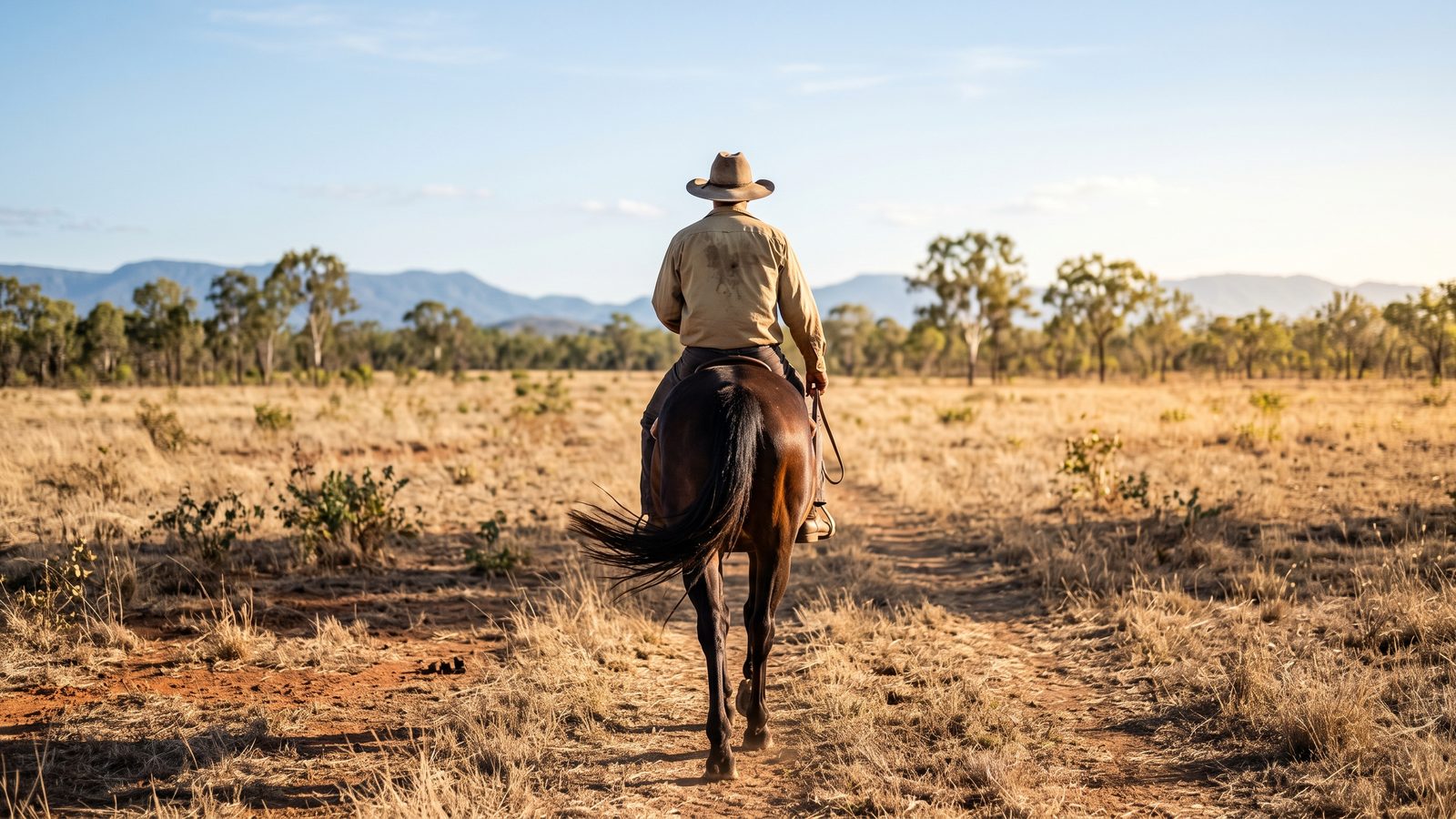
What changes when you learn on the horse you actually ride, at the place you actually keep him.
Most of us learned to ride on a school horse. You turned up, someone handed you a patient animal who had done it a thousand times, and you got on.
I've spent thirty years looking after school horses, training them and loving them, so let me say plainly what I think of them. They're unicorns. A good school horse can carry a frightened eight-year-old at nine o'clock and a returning adult at eleven, and give each of them the ride they need. That isn't luck and it isn't dullness. It's years of work and an enormous amount of generosity, and it is far harder than anything I ask of a horse who only has to know one rider. They turn up for it too. I've watched them come to the gate for a day's teaching more willingly than they ever came in for anything else.
So nothing here is a word against them. What follows is about a different moment, which arrives for most riders eventually: you've your own horse now. He has opinions, a stiff side, a spook he saves for the same corner every time, and a way of going that's entirely his own. And every lesson you take on somebody else's horse teaches you something you then have to translate.
I coach people on their own horses, at their own places. Here is what changes when you do.
You learn the horse you actually ride
The thing about a good school horse is that he has learned to make you look better than you are. A slightly late aid, an uneven rein, a moment of tension in your seat, and he quietly fills the gap and carries on. That's a skill, and it is a kindness, and it's exactly what you need while you're learning. Nobody should have to meet every one of their own mistakes at the same time as learning to sit.
But it does smooth the picture out. Your own horse hasn't learned to do that for you, and there's no reason he should have. So he answers what you actually asked. That can be uncomfortable the first time somebody points it out, and it's the most useful thing in riding. A horse answering honestly is giving you information no instructor can give you from the ground.
Both are doing their job well. They're just different jobs.
So when we work on your horse, we aren't practising riding in general. We are working on the specific conversation between you and this animal. Why he drifts right. Why he lifts his head in the first ten minutes and settles at fifteen. Whether that stiffness is training, or saddle, or the way you sit when you are concentrating. Those are your questions, and they only have answers on your horse.
The progress comes home with you
This is the part riders tell me they hadn't expected.
When you learn something on a school horse, you take home an idea, and he stays behind to teach somebody else at four o'clock. When you learn it on your own horse, you take home the horse who has just done it. He was there. He felt the difference too. Tomorrow morning you can go out and find it again, because the animal underneath you is the same one who found it yesterday.
That isn't a small thing. A great deal of riding progress is lost in the gap between the lesson and the next ride. Closing that gap does more for most riders than any amount of extra instruction.
Your place stops being a variable
Horses are honest about environment. A horse who is settled at home and rattled at a strange arena isn't being difficult, he's being a horse. But it means that if you float out for a lesson, part of what your coach sees is your horse coping with travel and a new place, not your horse working.
At home, that noise is gone. He knows the ground, the fence line, the neighbour's dog. What is left is the actual work.
There's a practical side too. No float, no travel, no finding somebody to help you load. For a lot of riders, particularly those who fit riding around a job or children, that's the difference between having lessons and meaning to have lessons.
And if your place isn't where you ride
Home is the usual answer. It isn't the only one.
If you agist your horse somewhere else, or if the ground you actually ride on is your club's, I'll come there instead. Plenty of riders do most of their real work at their club, because that's where the arena is, or because it's where they compete and ride clinics. If that's the surface and the space you'll be riding on when it counts, that's the sensible place to have a lesson.
One thing I'd ask: square it with the club first. Coaching on club grounds needs their permission, and it's a much easier conversation to have before the day than on it. Once you've got the nod, it's the same lesson.
What we can work on that you can't easily do elsewhere
Because we're at your place, on your horse, some things become possible that a venue lesson can't really cover:
- The surface you actually ride on. Whether that's a proper arena, a mown paddock or a flat corner near the shed, we work with what you've got and what it will let you do safely.
- The gear you ride in. Saddle fit, bit, the bridle you've had for years. I would rather see the real setup than a borrowed one.
- Groundwork and handling. The part of horsemanship that happens before you get on, in the place where you normally do it.
- The problem that only happens at home. The gate he won't stand at, the corner he leaves. You can't recreate those anywhere else.
It isn't always the easier option
I would rather be straight with you than sell it.
Learning on your own horse is more honest, and honest is sometimes harder. If your horse is green, you're learning together, and two learners are slower than one. If he's worried about something, we may spend a lesson on that instead of the thing you wanted to work on. And there are days when the answer isn't a riding answer at all, and I'll tell you if I think you should talk to your vet, your farrier or a saddle fitter before we go any further.
None of that's a reason not to do it. It's a reason to expect real progress rather than fast progress. Most riders I work with get better in small, specific steps, and those steps hold.
Frequently asked questions
Will my space limit what we can work on? A little, and less than most people expect. Flatwork, groundwork, transitions and most position work need far less room than riders assume, and plenty of good lessons happen in a paddock corner. What a small or uneven space does change is jumping and faster canter work, where I'll tell you plainly if I think the footing isn't up to it. There's a checklist of what to have ready if you want the practical version.
Is my horse too green for lessons? Usually not, though it changes what we do. With a green horse we tend to spend more time on groundwork, on the basics of straightness and rhythm, and on your position and timing, because a young horse learns from a clear rider. I would rather start early and build correctly than fix habits later.
I'm not competing. Is coaching still worth it? Yes, and most of the riders I work with aren't competing. Riding better is worth it for its own sake, and so is being safer, more comfortable and more confident with your horse. Personal bests count.
How often should I have lessons? It depends on you, your horse and your week, and I would rather you rode well between lessons than booked lessons you can't use. Some riders have a regular slot, others book when they want to work on something specific. There's no minimum, and a single lesson is completely fine.
What if my horse behaves badly on the day? Then that's the lesson, and it's often the most useful one you'll have. A horse having an opinion in front of an instructor is a gift. It means we get to work on the real thing instead of talking about it.
Keep reading
Horsemanship
Learning to read your horse
He's telling you something on every ride. Most of what looks like a training problem is a conversation you haven't learned to hear yet.
Before your lesson
What to have ready before I arrive
A short, practical checklist for your first mobile lesson, so the hour goes on riding rather than on sorting things out.
Coaching that comes to you
On your own horse, at your own place, across Townsville and surrounds.